
Search Beloit Property Tax Records
Beloit Property Tax Records are easiest to obtain when you use the city's own tax-bill and assessor pages first and then add official Rock County support only for the county side of the record. The City of Beloit explains how to pay a tax bill and where assessment questions belong, while official county resources can help with tax-database context and treasurer handling when the record reaches the county level. If you have an address, owner name, or tax bill in hand, the official Beloit and Rock County pages give a practical route for searching Property Tax Records without relying on private records sites or unverified search tools.
Beloit Property Tax Records Portal
The official starting point for Beloit Property Tax Records is the city's Paying My Tax Bill page. That page matters because it gives the city-side public explanation of how the bill is handled and where taxpayers should begin. Beloit does not need a private property site to explain its workflow. The city already provides a public page for tax-bill handling, which makes it the right entry point for obtaining Property Tax Records tied to current billing and city collection questions.
The city's Assessor page then provides the valuation and parcel-information side of the record. This is a useful division of roles. The tax-bill page covers payment and tax administration from the city side, while the assessor page helps users connect the bill to the property record, assessment process, and parcel characteristics maintained by the city assessor. Together, those two official city pages supply the local framework that a tax-record page should preserve.
The image below comes from the City of Beloit Paying My Tax Bill page at https://www.beloitwi.gov/?SEC=D77AE020-2B8C-4369-AE0E-E0F5887A2C05.
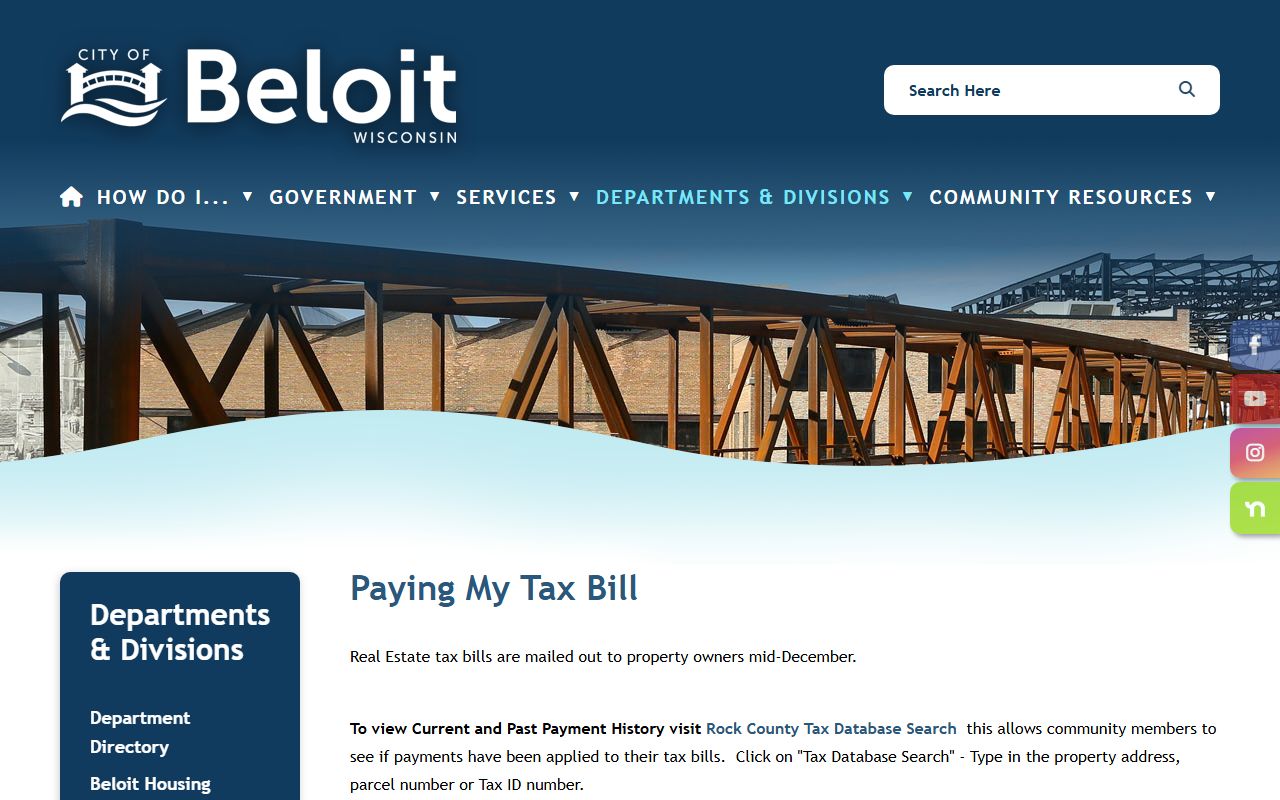
It shows the official city source used to frame Beloit Property Tax Records around the public tax-bill workflow.
Beloit Property Tax Records and Tax Bills
The city's tax-bill page is the most direct way into Beloit Property Tax Records because it keeps the public-facing tax process connected to the office that actually manages the bill. That is a better starting point than a bare data table because city taxpayers usually need context as much as they need the bill itself. They may be trying to confirm where to pay, understand whether the city or county currently handles the account, or determine which office should answer the next question.
Beloit's city page helps with that first step by anchoring the record in the local tax-bill process. When a city publishes a tax-bill page, it is doing more than repeating a statewide rule. It is telling the public how that city expects the record to be handled. That matters because even when Wisconsin cities share broad tax practices, the public workflow still depends on local office structure and local timing.
For Property Tax Records, the practical benefit is clarity. A user can start with the City of Beloit's tax-bill page to understand the billing side of the record before moving into the assessor or county resources. That sequence reduces confusion and keeps the public record trail anchored to official government sources.
Note: Beloit's city tax-bill page is the right first step for current city-side tax questions before you move to assessor or county sources.
Beloit Property Tax Records and Assessor
The official city assessor page is the valuation and parcel companion to Beloit Property Tax Records. Tax records are easier to interpret when the bill is considered alongside the assessor's description of the property, the parcel data maintained by the city, and the city's published assessment process. The assessor page gives Beloit taxpayers that side of the picture and makes clear that property-tax research is not only about paying a bill. It is also about understanding the real-estate record behind the bill.
This city-assessor connection matters because public users often need to distinguish between a billing question and a valuation question. A payment issue belongs with the city's tax-bill workflow. A question about property characteristics, assessed value, or how the parcel is reflected in local assessment records belongs with the assessor. When those roles are kept separate, Beloit Property Tax Records become easier to use and less likely to be misunderstood.
The assessor page is also useful for public review because it gives city context that a county tax database alone cannot provide. A county tax database may show a balance, history, or parcel line, but the city assessor page is what ties the tax record back to local assessment administration. That makes it an essential part of the official record trail.
The image below is sourced from the City of Beloit Assessor page at https://www.beloitwi.gov/assessor.
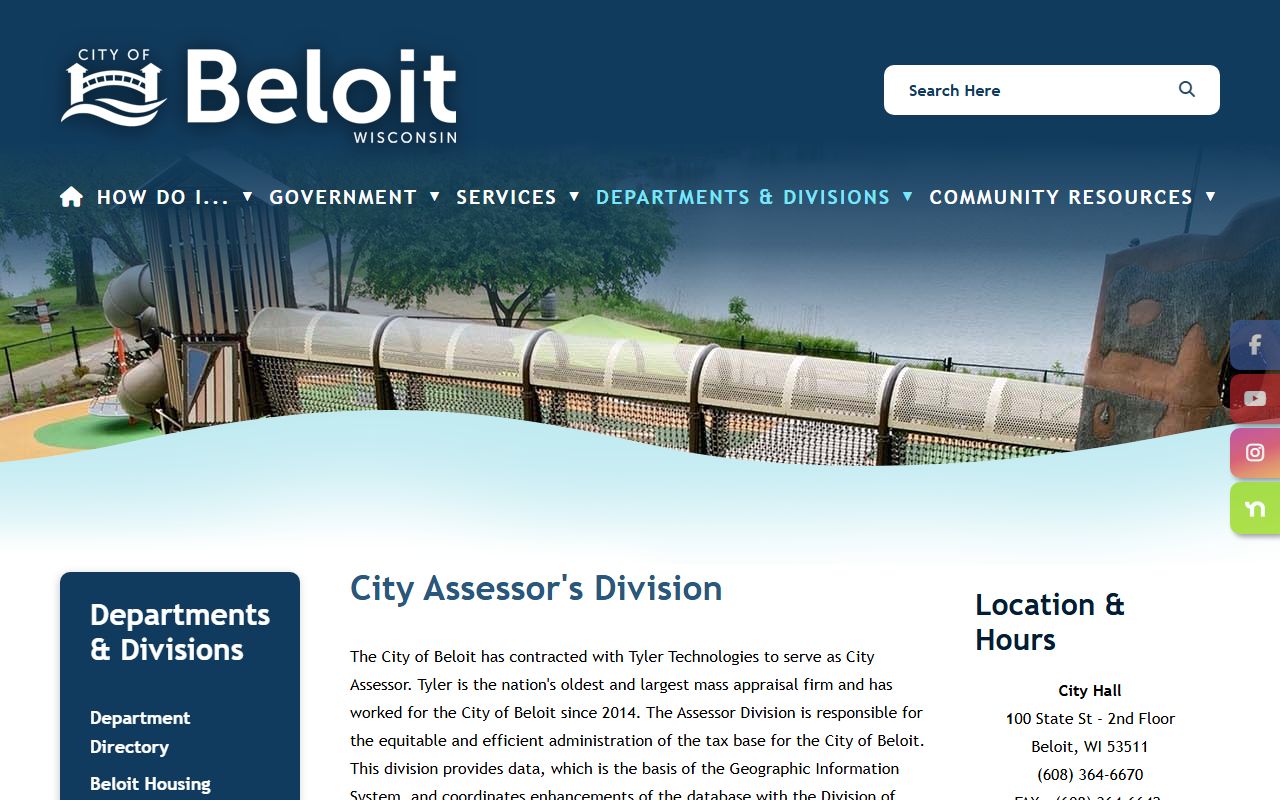
It belongs here because the assessor division is the city office that connects Beloit Property Tax Records to parcel description, valuation, and local assessment administration.
Beloit Property Tax Records and Rock County
Official Rock County support can be used when Beloit Property Tax Records need county context. The assignment research allows the use of the official Rock County Treasurer and the official Rock County tax database where relevant, and those county sources are helpful because they place the city record inside the broader county tax system. This should still be handled conservatively. The city remains the first stop for city tax-bill matters, and the county becomes useful where the record trail expands beyond the city page.
The county role is especially helpful when a user needs a more database-style search environment or wants to compare the city-side bill question with the county's tax-record presentation. County treasurer materials can also help explain how taxes are handled after the city's collection period and how parcel-level tax information is surfaced at the county level. For public research, that means Beloit and Rock County should be used together, but in the right order.
This order matters because it keeps the workflow accurate. Start with the City of Beloit tax-bill page when the question is about the bill itself, current city handling, or the city's published tax process. Move to the county treasurer or tax database when county administration or county-formatted parcel tax information becomes relevant. That approach keeps Beloit Property Tax Records specific to the actual office trail instead of flattening everything into one generic search concept.
Beloit Property Tax Records for Historical and Parcel Review
Property-tax research often turns into parcel review, ownership review, or historical review, and Beloit's official sources support that progression. The city assessor page helps connect the tax record to the parcel and assessment side of the file, while the county tax database can help add county-level tax context where appropriate. That combination gives public users a way to move from a current city bill question into broader record review without leaving official sources.
This matters because Property Tax Records are commonly used for more than payment. A resident, buyer, or researcher may need to compare parcel details, review how the property is identified in assessment records, or understand how the tax record is represented at the county level. The City of Beloit and Rock County together provide enough official structure for that work without relying on unofficial records websites or private aggregators.
The key is to preserve the local sequence. Use the city tax-bill page to anchor the record in the city's public tax process. Use the city assessor page to understand the parcel and assessment side. Then use official Rock County support to add tax-database context where the record clearly moves beyond the city page. That order keeps Beloit Property Tax Records grounded in the offices that actually maintain them.
Delinquent Beloit Property Tax Records
Delinquent Beloit Property Tax Records should be approached through the same city-first, county-second workflow. The city's tax-bill page establishes the Beloit side of the tax record, while the official Rock County Treasurer can supply county support where the account moves beyond routine city collection. This is the safest way to describe the record because it stays close to the official source set and avoids overstating features that were not directly verified in the research.
That conservative approach is appropriate here. Beloit's official pages clearly support the city-side tax and assessment path, and Rock County support is allowed where relevant. What the page should not do is invent a special delinquent portal or describe an unverified private search tool. The official sources already provide enough of a workflow: city tax-bill administration first, assessor context for parcel questions, and county support where the tax record reaches the county level.
For practical use, that means a taxpayer or researcher should start with the City of Beloit materials and then shift to Rock County only if the question requires county handling or county tax-database context. Beloit Property Tax Records remain easier to interpret when the city and county roles are kept distinct and used in sequence.
If you need another lookup, use the search widget below and start again with the address, owner name, or tax-bill clue you have. Beloit's official city pages and Rock County support provide a workable public record trail when you keep the city billing process and county tax context in their proper order.