
Search Wisconsin Property Tax Records
Wisconsin Property Tax Records are easiest to search when you start with the local office that actually maintains the bill, parcel file, assessment data, or payment history for the property you need. In some places that means a county treasurer. In others it means a city finance office, an assessor, a land records portal, or a county tax database that takes over after the city collection period ends. If you have a parcel number, owner name, or street address, the official Wisconsin county and city tools on this site can help you move from a quick search to the right public office without relying on thin third-party property pages.
Wisconsin Property Tax Records Overview
Where to Search Wisconsin Property Tax Records
Wisconsin Property Tax Records are spread across several local offices because the record itself is made from several pieces. The treasurer side tracks billing, receipts, later installments, delinquent balances, and in some counties tax deed or foreclosure work. The assessor side tracks valuation, property characteristics, notices, Open Book timing, and Board of Review procedures. Land records and real property lister pages help when the parcel changed shape, changed owner, or needs map context before the bill makes sense. Register of deeds pages matter when the tax line points toward a recent conveyance, a legal-description question, or a recorded document that explains why a parcel now appears under a different owner or label.
This is why a good search rarely begins and ends with one page. A parcel may still be in city collection through January or July, then shift to a county treasurer later in the cycle. A city assessor may maintain the valuation record while the county treasurer maintains the active payment status. A land records portal may show current and historical parcel context while a register of deeds office shows the recorded instrument that changed the ownership line. Wisconsin Property Tax Records are most useful when you treat them as a record trail instead of a single bill screen. The county and city pages on this site are built around that idea.
Note: The right office depends on where the property sits and where the tax record sits in the annual collection cycle. City collection and county collection are often not the same thing.
How to Search Wisconsin Property Tax Records
The most reliable search path usually starts with the smallest piece of verified information you already have. If you know the parcel number, use that first. Parcel numbers are more stable than mailing addresses and often connect directly to tax history, assessment data, and property characteristics. If you only know the street address, use the local parcel or land records search to identify the parcel number before you compare payment history or recorded documents. If you only know the owner name, search the local tax or assessor page that supports owner-name lookup and then confirm the parcel against the property address before assuming you have the right record.
After the parcel is identified, Wisconsin Property Tax Records are easier to read in layers. Start with the city or county billing page for the active balance and due-date workflow. Move to the assessor or assessment page for the value, classification, property characteristics, and appeal timing. Move to land records, GIS, or open data when the parcel location, split history, or map context matters. Then use the register of deeds when the tax question turns into a deed or ownership question. Many official Wisconsin sites now support current and historical record views, payment dates, bill copies, map access, and parcel-based search in one connected workflow, but you still get better results when you know which office is responsible for which part of the file.
The image below comes from the City of Madison Assessor property lookup at https://www.cityofmadison.com/assessor/property/.
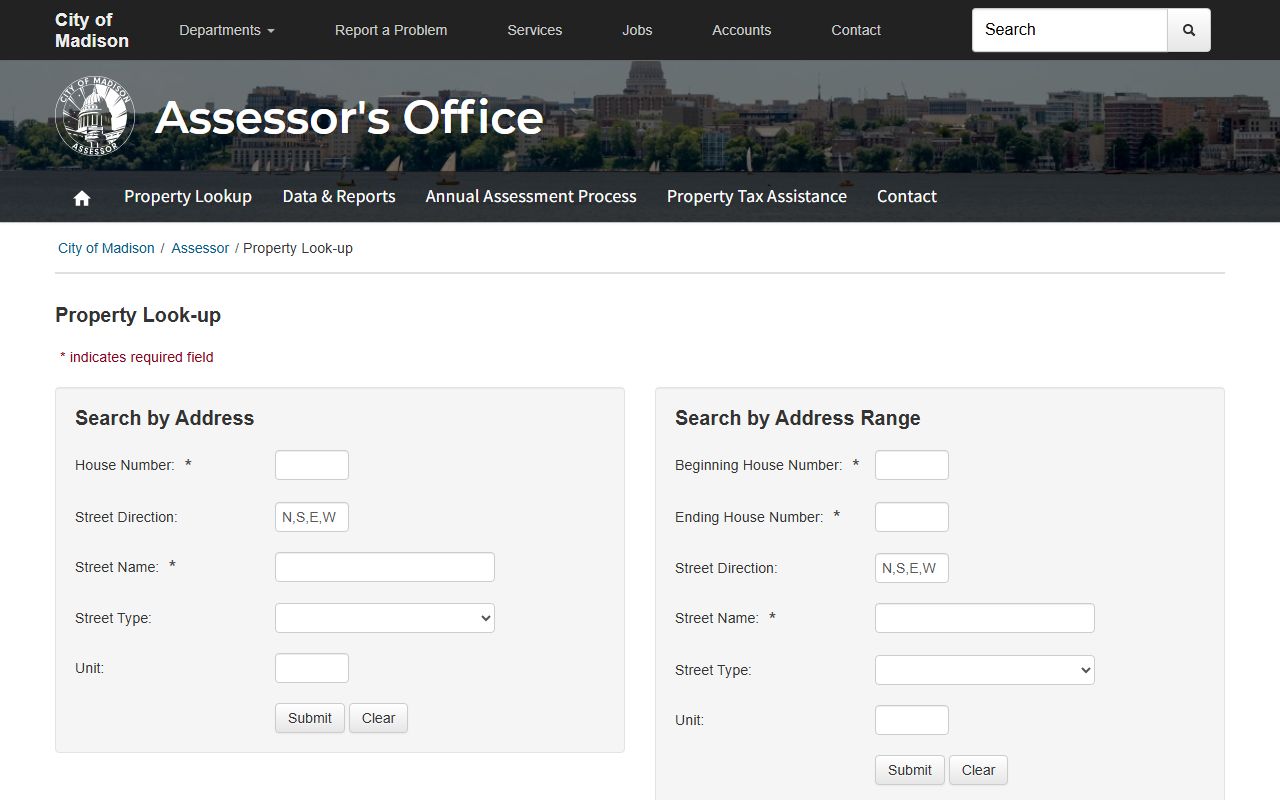
It fits this statewide guide because it shows the kind of official parcel search interface that many Wisconsin Property Tax Records workflows use before a user moves into billing, receipts, or deed research.
Wisconsin Property Tax Records by Record Type
Wisconsin Property Tax Records can include more than people expect. A treasurer page may show the current balance, prior payments, installment dates, receipts, and delinquent status. An assessor page may show the assessed value, land value, improvement value, property characteristics, revaluation timing, and appeal procedures. A county or city parcel portal may add current and historical views, owner names, public land survey details, lot dimensions, district data, or related GIS mapping. A register of deeds page may then explain the recorded deed or other document that changed the ownership line that later appeared on the bill.
That difference matters because users often search for one thing while really needing another. Someone may think they need a tax record when the actual question is whether the parcel characteristics are right. Another person may think they need an assessor page when the real issue is a posted payment date on the treasurer side. A third person may need the recorded deed that explains why the parcel is now billed under a different owner. Wisconsin Property Tax Records are best understood as connected local public records that move from valuation to billing to collection and, when necessary, to recorded land history.
Wisconsin Property Tax Records and State Rules
Wisconsin Property Tax Records are built inside a statewide framework even though the practical work happens at the city and county level. Wis. Stat. Chapter 70 is the main property tax chapter. It covers assessment, local review, levy structure, and related tax administration rules that shape what eventually appears on a local bill. Wis. Stat. Section 70.47 covers the Board of Review process, which is where formal local assessment objections are heard. The Department of Revenue's property tax administration resources and the Wisconsin Property Assessment Manual then explain how those rules are applied in practice.
Those state materials matter because local pages are often practical rather than explanatory. A city page may tell you where to pay, how to search, or when collection shifts to the county without fully explaining why the workflow is structured that way. A county page may show tax history and a parcel map without fully explaining how local assessment review works. The state framework fills those gaps. It does not replace local Wisconsin Property Tax Records, but it helps users interpret open book, Board of Review, assessment methodology, classification questions, and the relationship between the local record and statewide property tax administration.
The image below comes from the Wisconsin Department of Revenue property tax administration page at https://www.revenue.wi.gov/Pages/Governments/home.aspx.
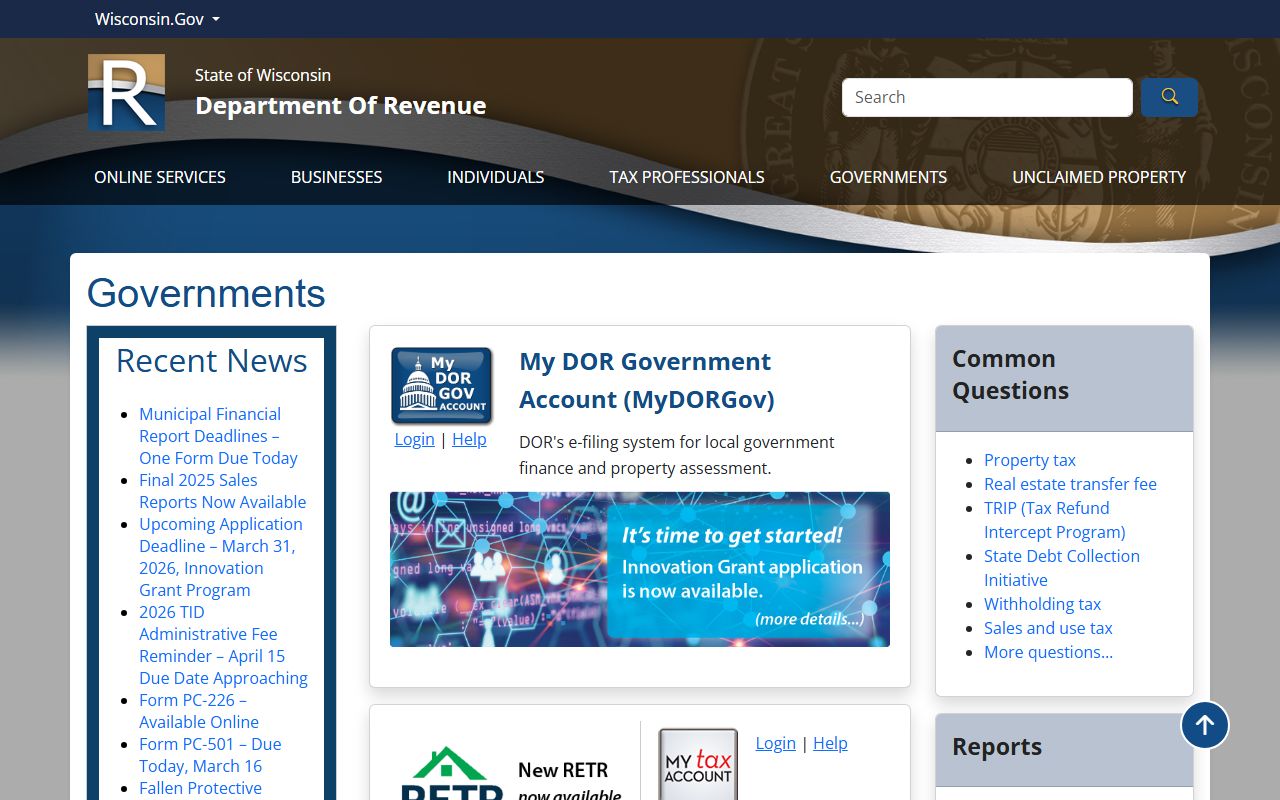
It belongs in this section because the Department of Revenue is the statewide administrative source behind the local assessment, levy, and collection rules that shape Wisconsin Property Tax Records.
Current, Delinquent, and Historical Wisconsin Property Tax Records
Current Wisconsin Property Tax Records usually live first on the local city or county collection page that mailed or posted the active bill. Delinquent Wisconsin Property Tax Records often shift to a county treasurer once the local collection window closes. Historical Wisconsin Property Tax Records may stay searchable in the same portal, move into archived tax rolls, or require a county or university archive if the records are older than the current digital system. That is why so many of the pages on this site mention both a current payment tool and a second source such as land records, archived rolls, or a county treasurer handoff.
This matters especially in Wisconsin cities where the city collects only through January or July while the county later collects the remainder or delinquent balance. A user may think the parcel still belongs on the city page because the property is inside the city, but the active payment record may already have moved to the county. The opposite problem happens too. Someone may start on a county page when the current bill is still squarely in the city collection window. Wisconsin Property Tax Records are easier to search once you first identify where the bill sits in that cycle and then use the supporting parcel and deed tools only after the active collection office is clear.
What Makes Wisconsin Property Tax Records Useful
Wisconsin Property Tax Records are useful because they pull several public functions into one local trail. A bill can show the amount due and the due date. A payment page can show whether the balance posted and when it posted. A parcel search can show the owner name, address, district, or historical parcel context. An assessor page can show property characteristics, notices, or valuation details. A land records page can show the deed side of the same property. Together those pieces can answer questions about ownership changes, payment verification, assessment review, parcel identity, older tax history, and the relationship between a current bill and the recorded property file.
That is why this site is organized by both county and city. In Wisconsin, the same property can involve city and county offices in the same tax year. Milwaukee, Madison, Green Bay, Kenosha, Racine, Appleton, Waukesha, Eau Claire, Oshkosh, Janesville, West Allis, La Crosse, Sheboygan, Wauwatosa, Brookfield, Sun Prairie, Wausau, New Berlin, Beloit, Manitowoc, Stevens Point, and Fitchburg each have their own mix of city and county support pages. County pages matter because they often hold the later tax, delinquent, land records, or parcel search functions that city pages reference. Wisconsin Property Tax Records make the most sense when you can move between those two levels without guessing.
Browse Wisconsin Property Tax Records by County
Each Wisconsin county has its own tax, parcel, deed, and collection workflow. Use the county pages below to move into official treasurer, land records, register of deeds, mapping, and payment resources for the area you need.
Wisconsin Property Tax Records in Major Cities
Wisconsin's largest cities often split Property Tax Records between city and county offices. Use the city pages below to start with the local workflow that applies to the property you need.