
Search Racine Property Tax Records
Racine Property Tax Records are easiest to use when you start with the city assessor and then move to the county treasurer only when the record question reaches installments, delinquent balances, or county-level tax history. That split matters because the City of Racine creates and maintains the assessment side of the record, while Racine County handles later collection stages and county tax tools. If you have a parcel number, street address, or owner name, those official pages give you a practical path from a basic search to the offices that explain how the record was valued, billed, reviewed, and tracked.
Racine Property Tax Records Assessor
The official City of Racine Assessor page is the strongest local starting point for Racine Property Tax Records. The city explains that the assessor prepares the assessment roll, tracks property characteristics, supports Open Book and Board of Review processes, issues notices, and manages the revaluation schedule. That makes the assessor page more than a contact page. It is the place where the city explains how the value side of the record is created and how property owners can review the information attached to a parcel before they move deeper into a tax question.
This matters because many property tax problems begin as assessment questions. A bill may look wrong because the parcel class is off, because a property characteristic changed, or because the assessed value moved during revaluation. The City of Racine assessor page is useful precisely because it connects those issues to the local review process instead of leaving the user with a raw number on a tax bill. For Racine Property Tax Records, that city-side explanation is the clearest starting point.
The image below comes from the City of Racine Assessor page at https://www.cityofracine.org/departments/assessor.
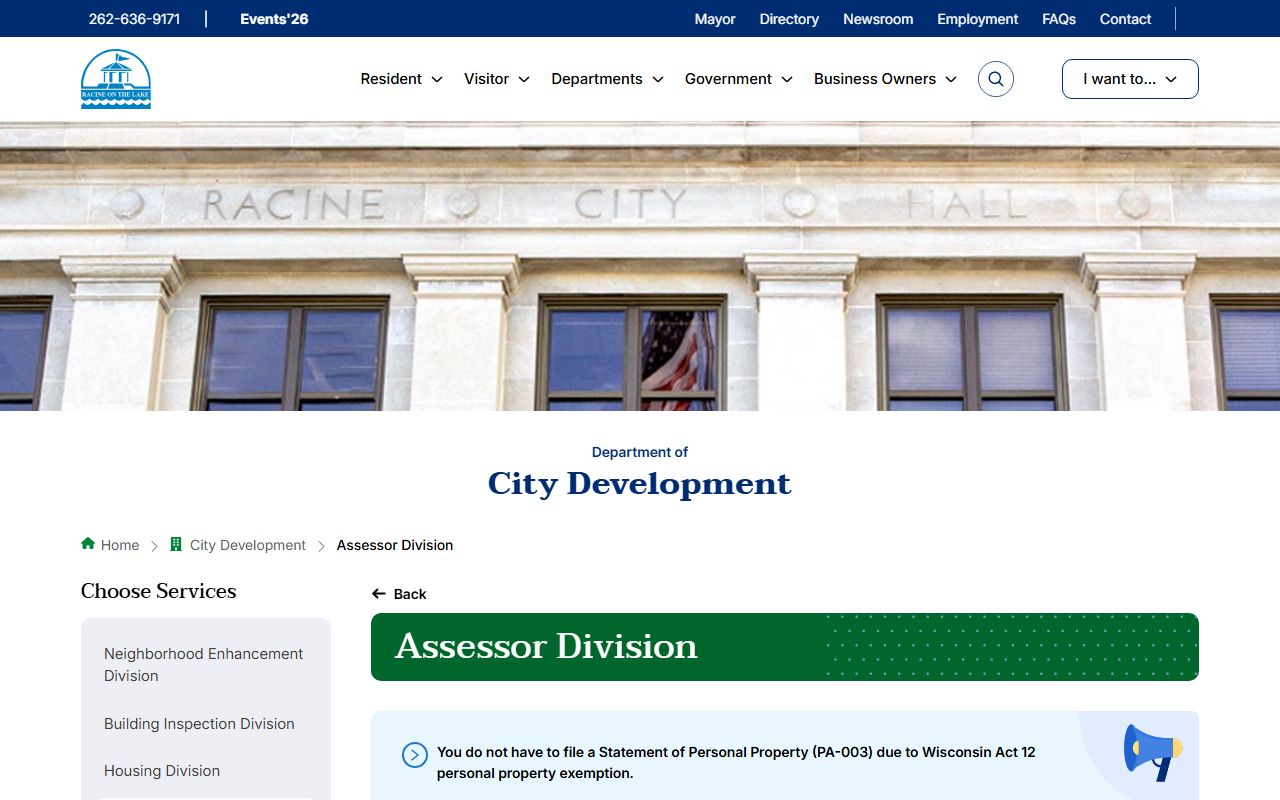
It fits this page because the assessor is where Racine explains the assessment roll, review schedule, parcel characteristics, and appeal path that shape the city property tax record.
Racine Property Tax Records Roll
The city also posts the 2024 Final Real Estate Assessment Roll, which is one of the most concrete public sources for Racine Property Tax Records. The PDF is organized by parcel and includes addresses, assessed values, classifications, and lot-size information. That is useful because it lets a user move beyond a simple bill search and compare how a parcel appears within the citywide roll. If the question is whether a property looks consistent with nearby parcels or whether the value and class shown on a bill match the city's roll, this file is the best city-level reference.
The format also helps with historical checking inside a single tax year. The assessment roll shows where a parcel sits in the city's organized record system, which is often the easiest way to confirm that a parcel ID, address, and value trail still line up. For Racine Property Tax Records, that roll gives the public a direct look at the city-generated data that later feeds the tax side of the record. It is a practical bridge between the assessor's explanation page and the later collection pages handled through the county.
Racine Property Tax Records Review
The city assessor page is also important because it lays out the local review path. The City of Racine explains Open Book, Board of Review, appeal timing, and notice handling in one place. That matters for Racine Property Tax Records because searching for a record is not always the end of the process. Sometimes the next question is whether the parcel data or assessed value should be challenged. Open Book is the point for informal review, while Board of Review is the formal local step when a property owner believes the assessment remains wrong.
That local process is part of the tax record even though it is not always shown on a public search screen. Notices, property characteristics, and revaluation schedules all affect how the eventual tax record will look. If a user wants to understand why one year's entry changed from the last, the best place to start is often not the county collector. It is the city assessor's explanation of how the record was created and when it was open for review.
Racine Property Tax Records County
The Racine County Treasurer page picks up where the city assessor leaves off. The county says it provides assessment rolls online, ties Board of Review questions back to the municipality, handles second-installment and delinquent collection, and offers county-side tools such as assessment data and a tax foreclosure map. That makes the county page the right companion to the city pages when Racine Property Tax Records move from valuation and notices into payment status, delinquent balances, or later-stage county collection.
This county layer matters because the city and county do not do the same job. The City of Racine assessor prepares and explains the local assessment record. Racine County handles later collection stages and county tools. If you are checking a parcel after the first installment stage, or if a balance has moved into delinquency, the county treasurer page is the official place to continue the search. Used together, the city and county pages show the full local record trail instead of a partial snapshot.
Racine Property Tax Records Trail
Racine Property Tax Records are strongest when the city and county pages are read as one process. The city assessor creates the assessment roll, maintains parcel characteristics, and explains review rights. The assessment roll PDF gives the public a parcel-organized view of that data. Racine County then handles the county-side search and collection functions that matter once the bill has been issued and later installments or delinquent balances come into play. That division of labor is not a flaw. It is the normal local record trail.
Reading the sources in that order also reduces confusion. If a parcel value looks wrong, the assessor and roll are the best places to start. If the question is about installment status, delinquent tax handling, or county-side online records, the county treasurer page is more useful. When those sources are matched correctly, Racine Property Tax Records become much easier to interpret and much less likely to be misread as a single, flat data set.
Wisconsin Property Tax Guidance
When Racine Property Tax Records need more context, Wisconsin's Department of Revenue property tax administration resources and the Wisconsin Property Assessment Manual help explain how local assessment and review fit into the statewide system. Those state pages are useful when a city parcel issue raises a broader question about valuation standards, review procedures, or the structure of a property tax account.
They are especially useful here because the City of Racine and Racine County pages focus on the local workflow rather than long legal explanation. If you need a broader frame for the city assessment process or for how the county-side record fits into Wisconsin practice, the state pages are the cleanest official companion. They add context without pulling the search away from public sources.
Delinquent Racine Property Tax Records
Delinquent Racine Property Tax Records remain part of the same local record trail. The county treasurer page says it handles second installments and delinquent collection, and it also provides county assessment data and a tax foreclosure map. That means a city parcel that begins on the assessor side can later move into a county-managed collection view. If you are trying to understand why a property appears in one office's records but not another's, this shift in responsibility is usually the reason.
The practical way to read a delinquent Racine record is to start with the city parcel and assessment data, then move to the county treasurer tools once the collection stage changes. That approach keeps the search tied to the actual public process instead of forcing city and county functions into one box. It also gives Racine Property Tax Records a clearer logic from first value to later balance.
If you need another lookup, use the search widget below and start again with the parcel number, owner name, or property address. Racine works best when the assessor, assessment roll, and county treasurer pages are checked together, so a second search often resolves a question that looked unclear at first.