
Search La Crosse Property Tax Records
La Crosse Property Tax Records are easiest to follow when you begin with the city finance and assessor pages, then use county treasurer and county land-record tools when the record question moves into tax history, parcel access, or later-stage collection. That split matters because the city and county do not manage the same part of the process. If you have an address, parcel number, or owner name, those official sources give you a clear route from local billing and assessment questions to the county resources that support parcel search, payment history, and deed-linked record review.
La Crosse Property Tax Records Finance
The official City Finance Department page is the city-side starting point for La Crosse Property Tax Records. The finance department page identifies the city office responsible for municipal finance functions, including the handling of city revenue and billing-related work that supports the property tax cycle. That makes it the right first stop when the question is about the local side of collection, public payment handling, or where a city taxpayer should begin before moving to county-supported parcel or tax-history tools.
This city page matters because it keeps the municipal part of the process clear. A taxpayer in La Crosse may need to know whether a question belongs to the city billing side or to the county-side record system. Starting with city finance makes that easier. It gives the local office context first, then lets the search move to county pages only when parcel history, broader tax records, or later-stage collection questions require it.
La Crosse Property Tax Records Assessor
The official City Assessor page is the assessment-side source for La Crosse Property Tax Records. Research for this project identifies it as the Office of the City Assessor, which means it is the city source for parcel characteristics, assessment review, valuation notices, and the local path for questions that begin before a bill is collected. That is important because tax records are not built from billing alone. They reflect assessment data and local roll preparation that happen earlier in the cycle.
For search work, the assessor page helps keep the local record straight. If a property owner is trying to understand why a value changed, why a characteristic appears a certain way, or how to approach review and appeal, the assessor is the correct city source. La Crosse Property Tax Records therefore make more sense when the assessor page and the finance page are read together. One explains the value side. The other explains the city finance side.
The image below comes from the La Crosse County Treasurer page at https://www.lacrossecounty.org/treasurer/.
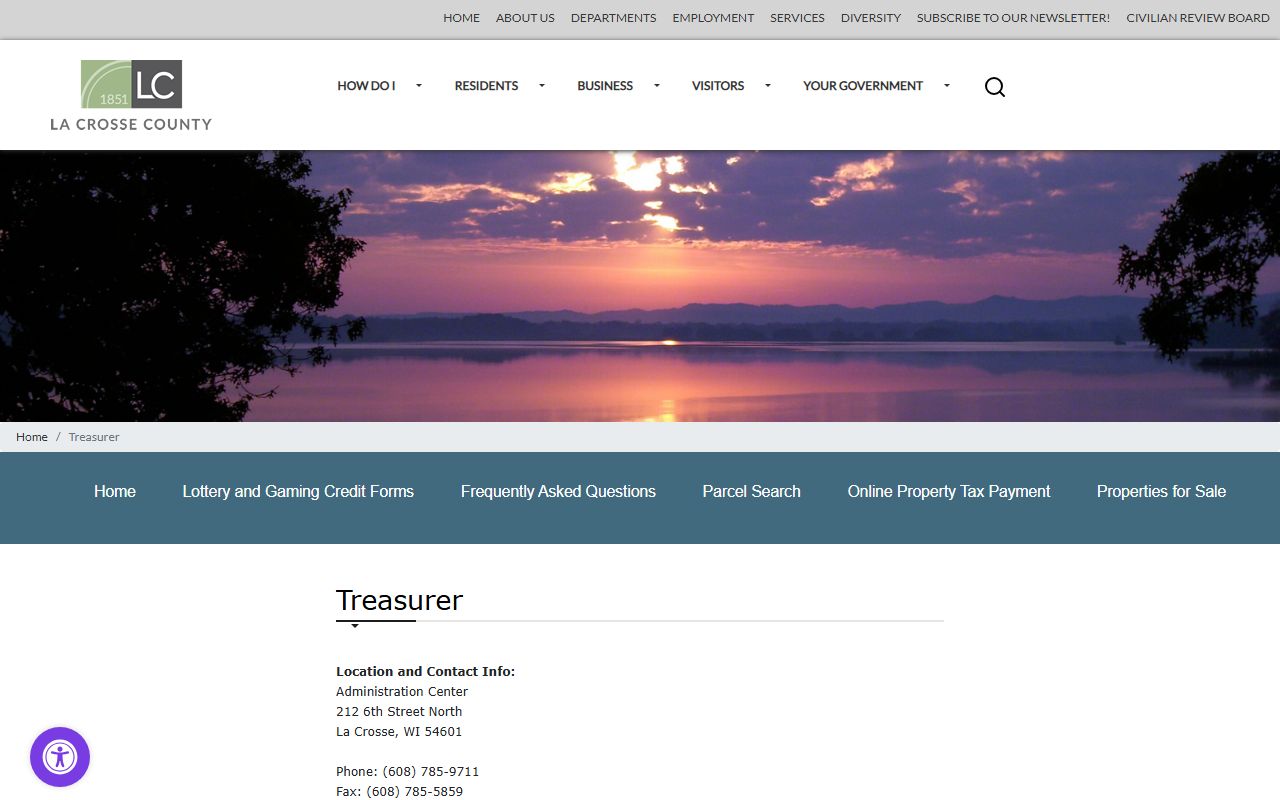
It fits this page because the county treasurer is the approved official source for the county-side tax tools that support La Crosse property tax search and payment research.
La Crosse Property Tax Records County
The La Crosse County Treasurer page is the county-side companion to the city pages. Research for this project identifies it as the county source for property tax information, with the treasurer's office at 400 North 4th Street in La Crosse. This is the page that matters when La Crosse Property Tax Records move beyond local city questions and into county-managed tax information, later-stage collection, or county-level payment and record support. The county page is therefore the public source to compare against the city pages when a parcel needs more than a city department overview.
That county layer is important because city and county functions are not interchangeable. The city finance and assessor pages explain local roles. The county treasurer page supports the broader property-tax record and collection framework that applies once the record needs county-side handling. If you are checking a parcel after a local question turns into a tax-history or county-processing issue, this is the official place to continue the search.
La Crosse Property Tax Records Land
Research for this project also identifies La Crosse County Land Records as part of the official county record path. That page matters because many property tax questions are really parcel questions. A bill can look wrong because a parcel line changed, a deed transfer altered the owner record, or the map and tax entry no longer seem to match. County land records are what help connect the amount on a bill to the underlying parcel and mapped property history.
The county land-record path is especially useful in La Crosse because the city pages provided for this build are department-level pages, not a dedicated parcel-search portal. The county land-record resources fill that gap. They give La Crosse Property Tax Records a more complete search trail by linking the tax side of the record to parcel access and related land information. That makes the public workflow more useful for someone who needs more than a simple city billing reference.
La Crosse Property Tax Records Deeds
Research also identifies the La Crosse County Register of Deeds page as part of the official county record path. The register is important for La Crosse Property Tax Records because recorded documents explain changes that tax records alone may not show clearly. A deed, mortgage-related filing, or other recorded real estate document can clarify why an owner changed, why a parcel was split, or why a legal description on the tax side no longer matches an older record.
That means the deed side and the tax side should be read together when the parcel history is unclear. The city pages explain local billing and assessment functions. The county treasurer page explains county tax information. The register of deeds page adds the recorded-document trail. When those sources are checked together, La Crosse Property Tax Records become far easier to understand and less likely to be treated as a flat list of tax amounts without context.
La Crosse Property Tax Records Trail
La Crosse Property Tax Records are best read as a linked city-and-county process. The city finance page anchors the municipal collection side. The city assessor page explains the local assessment and value side. The county treasurer page supports broader property-tax information and county-side handling. County land records and the register of deeds add parcel and document context that a city billing page cannot provide by itself. Each page plays a different part, and the record is strongest when those roles stay clear.
This split is not a problem. It is the local workflow. If the issue is assessment, start with the city assessor. If the issue is municipal finance handling, start with city finance. If the issue is county tax support, parcel access, or a deed-linked question, move to the county pages. That makes La Crosse Property Tax Records easier to search because the public knows which office is likely to answer which part of the question.
Wisconsin Property Tax Guidance
When La Crosse Property Tax Records need a wider frame, Wisconsin's Department of Revenue property tax administration resources and the Wisconsin Property Assessment Manual help explain how local assessment, finance, and county tax systems fit into the statewide structure. Those state pages are useful when a city taxpayer wants more context on valuation, review standards, or the way local and county offices fit into Wisconsin's property-tax process.
They are especially helpful here because La Crosse uses several public offices to explain different parts of the record trail. The state pages do not replace those local sources, but they help explain why the process is divided between city and county functions. Used with the city and county pages, they give La Crosse Property Tax Records more context without sending the search outside official sources.
Delinquent La Crosse Property Tax Records
Delinquent La Crosse Property Tax Records belong on the county side of this local workflow. The county treasurer page is the official county source for property-tax information, which makes it the right public page to review when a local billing question turns into a later-stage tax issue. If a balance is no longer just a city payment question, the county treasurer is the source that should be checked next. That is the cleanest way to keep a late or older record tied to the proper office.
The practical approach is to start with the city's own finance and assessment pages so you understand the local record, then move to the county treasurer and county land-record path if the issue involves a deeper tax-history or parcel question. That keeps the search disciplined and gives La Crosse Property Tax Records a clear route from city notice to county-supported record review.
If you need another lookup, use the search widget below and start again with the address, owner name, or parcel details. La Crosse works best when the city finance and assessor pages are checked alongside the county treasurer and land-record path, so a second search often helps sort out whether the issue is city-side or county-side.