
Search New Berlin Property Tax Records
New Berlin Property Tax Records are easiest to follow when you start with the city's tax bill information page and then use the related city FAQ and county support only as the record moves through the normal payment cycle. The City of New Berlin explains how tax bills are issued, how installments work, and when unpaid balances move to Waukesha County, which gives residents a practical record trail from the original city bill to later county handling. If you have an address, parcel-related question, or payment concern, the official New Berlin materials give enough direction to search and obtain Property Tax Records without relying on private record sites.
New Berlin Property Tax Records Portal
The official starting point for New Berlin Property Tax Records is the city's Tax Bill Information page. That page is important because the city uses it as the public explanation of how residents should approach their tax bill, where the tax season starts, and when a taxpayer should remain with the city versus move to county resources. New Berlin does not frame the process as a generic statewide lookup. It presents it as a city tax-bill workflow with local timing and city-specific instructions.
The same official page is also where New Berlin explains key procedural points that shape the record trail. Research notes for this assignment identify installment options, online payments through Waukesha County, and the fact that delinquent taxes move to the county after August 1. Those details matter because Property Tax Records are not only about seeing a bill. They are also about understanding which office is responsible for the record at a given point in the collection cycle and where a resident should go next.
The image below comes from the City of New Berlin Tax Bill Information page at https://www.newberlinwi.gov/86/Tax-Bill-Information.
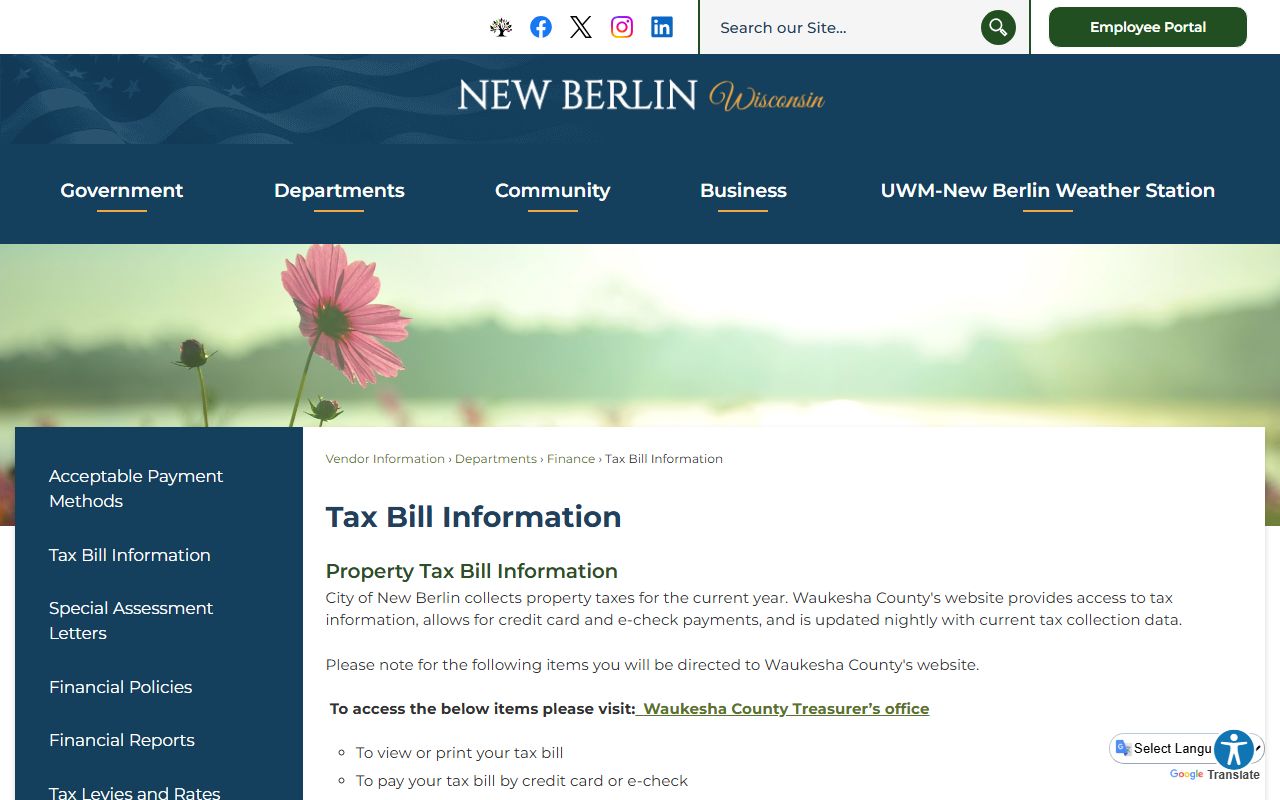
It reflects the official city entry point for New Berlin Property Tax Records and supports the city's published tax-bill workflow.
New Berlin Property Tax Records and Tax Bills
The City of New Berlin's tax-bill page gives the clearest city-side explanation of how New Berlin Property Tax Records should be read. It is the right place to start because the city organizes the information around the actual tax bill rather than around a broad property-record concept. That approach is useful for residents who need to confirm what the bill represents, when installments apply, and whether their question still belongs with the city.
The city also maintains a FAQ that helps reinforce the process. In practice, that means a taxpayer can start with the main tax-bill page for the core workflow and then use the FAQ for related city guidance. This matters because a public tax record often raises ordinary practical questions first, such as where to pay, when a balance changes offices, or how the city distinguishes its responsibilities from county responsibilities. The official New Berlin pages keep those questions inside a city-managed record trail.
For Property Tax Records, this kind of local framing is more useful than a bare parcel listing. It tells the user not just that a bill exists, but how the city expects the bill to be handled. That makes the city page a stronger starting point than any unofficial directory that strips away local process.
The image below is sourced from the City of New Berlin FAQ page at https://www.newberlinwi.gov/faq.
It fits this section because the city's FAQ is one of the supporting official pages that answers common New Berlin Property Tax Records questions around process, payments, and office responsibility.
Note: New Berlin's own tax-bill materials set the timeline for installments, city collection, and the later county handoff, so use those city pages before branching out.
New Berlin Property Tax Records Payment Path
New Berlin Property Tax Records are closely tied to payment status, and the official city materials make that connection clear. Research for this page indicates that online payments run through Waukesha County support, which means the city record path is partly local and partly county-based. That is a normal Wisconsin arrangement, but it only works well for the public when the city explains it clearly. New Berlin does that by using its Tax Bill Information page as the main public guide rather than sending residents directly to an outside processor without context.
This matters because taxpayers often assume that the website taking payment is also the office that owns every part of the record. In New Berlin, the city page provides the public explanation and the city-specific timing, while the county support handles the online-payment side. That division is useful. It lets a user understand the record from the city's point of view before moving into the payment system that supports the transaction.
The record trail is therefore best read in order. Start with the city page to identify the tax-bill cycle and the current stage of collection. Then move to the county-linked payment workflow if the question is about paying online or confirming the payment path connected to the city bill. That sequence preserves the local context that makes New Berlin Property Tax Records understandable.
New Berlin Property Tax Records Installments and Timing
The installment structure is one of the most important parts of New Berlin Property Tax Records because it affects where a property owner should look and which office is handling the account. The official city Tax Bill Information page and related research notes show that New Berlin uses installment options and distinguishes between the city collection period and the later county phase. That is not just a payment rule. It is a record-access rule, because the office that is actively collecting the tax is often the office with the most useful current status information.
The city's rates page also adds helpful context. A rates page does not function as a search portal by itself, but it helps taxpayers understand the local tax environment behind the bill and gives the city page more substance than a payment instruction alone. When combined with the main Tax Bill Information page, it supports a fuller reading of the property-tax record by showing how the bill fits into the city's published tax structure.
For users of New Berlin Property Tax Records, the practical takeaway is simple. If the question is about the current bill and the city collection window, stay with the city guidance first. If the issue concerns the later stage after the city's stated handoff point, use the county support that the city itself identifies. The records are easier to interpret when timing and office responsibility are kept together.
The image below is sourced from the New Berlin tax rates page at https://www.newberlinwi.gov/86/Tax-Bill-Information/rates.
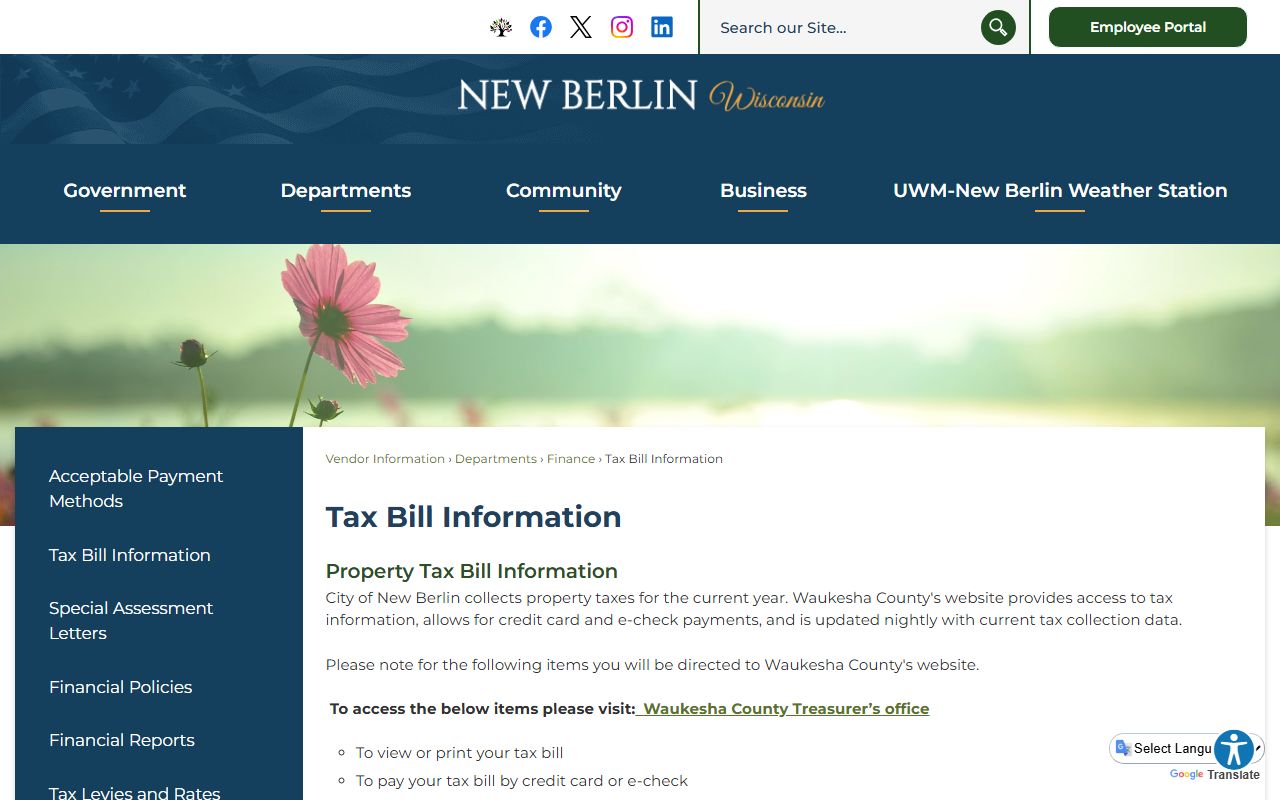
It belongs here because the city's tax rates page explains the local rate structure that gives context to New Berlin Property Tax Records and the city's installment timeline.
Delinquent New Berlin Property Tax Records
Delinquent New Berlin Property Tax Records should be approached conservatively and through the official city explanation of when the account moves beyond the city collection period. Research notes for this assignment specify that delinquent taxes go to Waukesha County after August 1. That is the key jurisdiction-specific detail for the page because it tells the user when the city is no longer the only office involved in the tax record.
The city Tax Bill Information page remains important even after that handoff because it explains the overall sequence. A public user trying to obtain Property Tax Records needs to know not just where a bill can be paid today, but also whether the record is still in the city's collection stage or has already moved to county handling. The official city materials provide that distinction, and the official Waukesha County Treasurer's property-information resources become the county support once the city says the account has advanced.
This is why unofficial record websites are not needed. The verified city and county path already covers the basic workflow: city billing and local instructions first, county online-payment support during the process, and county responsibility after the delinquent handoff date identified in the city research. That is enough to keep New Berlin Property Tax Records specific, accurate, and grounded in the public offices that actually handle them.
New Berlin Property Tax Records and Public Questions
City tax records are often used for ordinary public questions that go beyond simply paying a bill. Residents may need to confirm the current tax cycle, check whether a balance is still with the city, review the city's published rates, or determine whether a later county contact is more appropriate. New Berlin's official materials support that kind of use because they are organized around public inquiry instead of only back-office processing.
The FAQ helps here because it adds practical guidance around common municipal questions. The rates page helps because it adds local tax context. The main tax-bill page helps because it defines the actual collection path. Together, those sources provide a city-specific record trail that is more useful than a generic statement that taxes are due and payable. For New Berlin Property Tax Records, the best public workflow is still the simplest one: start with the city's main tax-bill page, use the city's supporting pages to answer process questions, and then follow the city's own direction when county support becomes necessary.
That local sequence also preserves accuracy. It keeps the resident inside official sources, avoids overstating portal features that were not verified, and still explains how the record moves from city guidance to county support. That is the right balance for a page built from a narrower but reliable official source set.
If you need another lookup, use the search widget below and start again with the property address, tax bill details, or related public record clue you have. New Berlin's official workflow is most useful when you stay with the city tax-bill guidance first and use county support only where the city directs you to it.