
Clark County Property Tax Records Lookup
Clark County Property Tax Records are easiest to follow when you begin with the county's tax search and payment pages, then move into land information or assessment support when the parcel needs more context. The county's tools are built to show current and historical tax information, payment history, and printable tax bills, which makes them useful for routine balance checks and deeper parcel research alike. If you know a parcel number or address, you can usually move from a search result to the bill, map, and account details without leaving the county's official record system.
Clark County Property Tax Records Portal
The main county search page at Clark County Property Search supports parcel and address lookups, current and historical tax information, assessment integration, payment history, printable tax bills, mobile access, guest login, and 24/7 use. That is the central piece of Clark County Property Tax Records research because it lets you go from a simple lookup to the underlying billing and ownership context in one place. A parcel number is the fastest key, but the county also built the search for address-based lookups when the tax bill is the only clue you have.
Once the record opens, the county's search format is helpful because it keeps the tax, assessment, and payment data together instead of scattering them across separate pages. That matters when a bill looks different from one year to the next, when a payment needs to be confirmed, or when you want to compare the current account against the historical record. The same page is also practical on mobile, so Clark County Property Tax Records can be checked from a phone without losing access to the bill or payment trail that supports the parcel entry.
Clark County Treasurer and Payments
The county treasurer tax page at Clark County Treasurer Tax Page explains the office contact information, office hours, location, delinquent procedures, tax payment options, and tax deed overview. For Clark County Property Tax Records users, that page is the practical bridge between the online search result and the county office that handles the collection side of the record. It also helps if you need to know whether a bill should be paid online, mailed, dropped off, or handled in person.
The county's payments page says the first installment is due January 31 to the local treasurer and the second installment is due July 31 to the county. The page also explains online, in-person, mail, and drop box payment options, along with card and e-check fees, interest, and the tax deed process if a delinquent balance is not resolved. That mix of details is useful because Clark County Property Tax Records are not just a bill lookup. They are also a payment calendar, a delinquency tracker, and a record of what has already posted.
The screenshot below comes from the Clark County Treasurer tax page at the county source page.
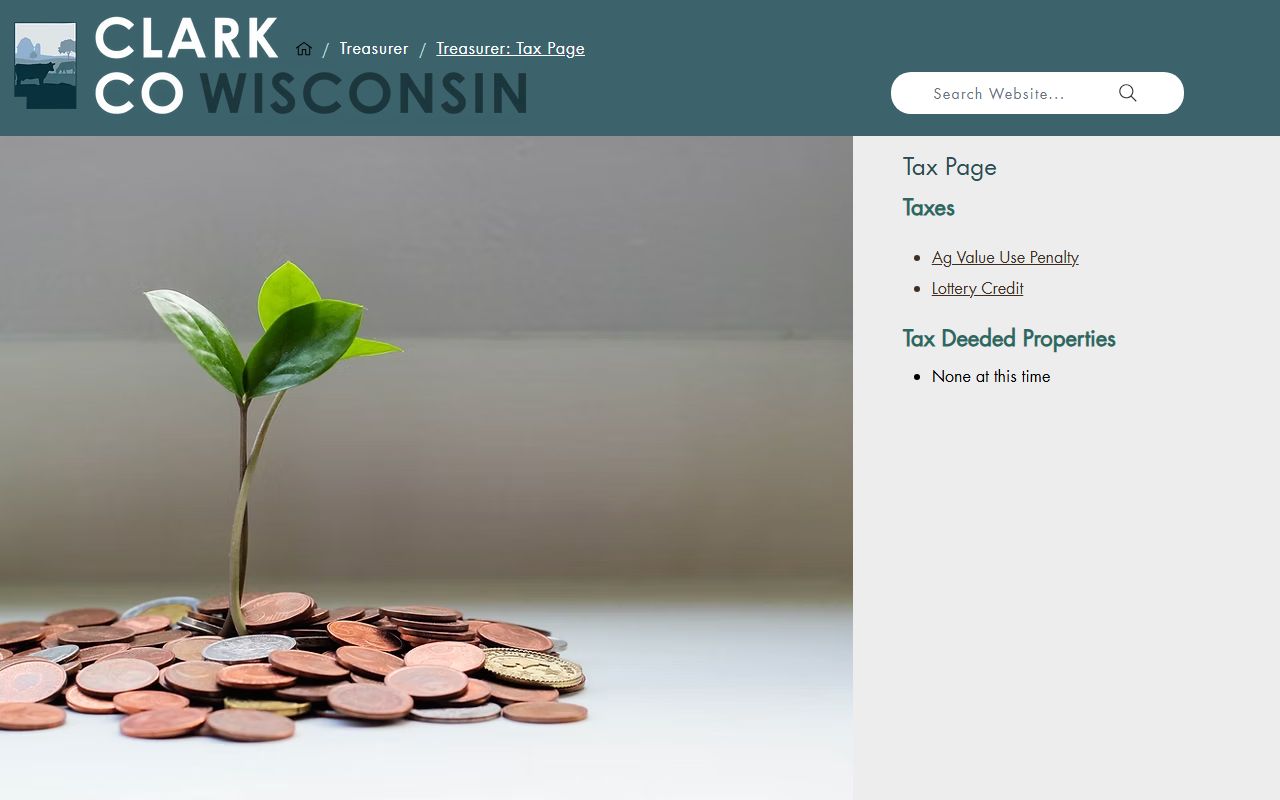
It points to the office page that supports payment timing, delinquency questions, and the local contact details people usually need after they have already found the parcel record.
Clark County Property Tax Records in Beacon
Clark County also provides a deeper search and map environment through Beacon by Schneider. The system supports map, text, advanced, buffer, and polygon searches, which gives users several ways to locate a parcel when the address alone is not enough. Its report sections include summary, valuation, tax history, tax payments, conveyances, photos, permits, land use, soils, and flood layers. For Clark County Property Tax Records work, that means you can move from the tax bill to a much broader parcel report without leaving the same official toolset.
The Beacon record can display parcel or tax ID, address, legal description, section-township-range, district, school district, acres, owners, assessments, fair market value, total tax, managed forest tax, first dollar credit, lottery credit, net tax, year and date paid, total charge, amount posted, balance due, interest, and penalty. That level of detail is useful when you need to see how the bill was built rather than just what the final amount is. It also makes Clark County Property Tax Records easier to compare against deed records, tax history, or a recent payment, because the report shows both the map side and the accounting side of the parcel.
Land Information and Maps
The county's land information page at Clark County Land Information explains how the county modernizes records with help from the Register of Deeds, Surveyor, and Treasurer. It covers mapbooks, emergency atlas work, soils, land ownership, taxes, topography, parcels, county board maps, unclaimed funds, and the Land Information Council. That matters because Clark County Property Tax Records become more useful when the map, parcel, and ownership layers are kept in step. The county also says records are updated continually, which is important in a county where parcel changes and map edits can happen over time.
This land information layer is often the place to go when a tax record makes sense on paper but still needs geographic context. If the address has changed, if a parcel was split, or if you are trying to match the tax record to the actual ground, the mapbooks and parcel datasets help show where the record sits in the county's layout. For Clark County Property Tax Records users, that is the bridge between a tax line and a physical tract of land, and it is often the quickest way to confirm that the account belongs to the right parcel.
Clark County Property Tax Records and Assessments
Assessment review still matters in Clark County because the tax record depends on the value record underneath it. If a parcel's value changed, the right place to start is the assessment process under Wis. Stat. Chapter 70 and Wis. Stat. Section 70.47. The Department of Revenue's Wisconsin Property Assessment Manual and PB-055 are useful when you want to understand how open book, board review, and assessment evidence fit together. That framework helps explain why a Clark County Property Tax Records entry may differ from the prior year.
The county's property search and Beacon report both surface assessment data, which makes it easier to compare the tax bill against valuation history and appeal notes. If the roll changed because of a revaluation, a correction, or a hearing result, the county search can show the latest record while the state guidance explains the procedure that produced it. If you need the owner-friendly overview of how the bill is structured, PB-060 is a good companion reference. Together, those sources turn Clark County Property Tax Records into a record set that can be read, checked, and explained instead of just viewed.
Delinquent Records and State Guidance
Clark County's treasurer pages are also where delinquent property tax questions land. The county explains the interest and penalty path, the tax deed overview, and the payment methods that can still be used before a parcel moves deeper into delinquency. That is important because Clark County Property Tax Records are often consulted after a due date has passed, when the question is not just what the bill was but whether the balance moved, when it moved, and what the county treats as the next collection step. A good search should make that sequence visible.
State resources help put the local record in context. The Department of Revenue's property tax administration portal and the annual Town, Village and City Taxes Bulletin help explain statewide tax administration, while Lottery and Gaming Credit can help you understand a credit line on the bill. If a parcel is agricultural, PB-061 is the right official guide. Those references do not replace Clark County Property Tax Records, but they make the county records easier to interpret when the balance, credit, or delinquent status needs an explanation.