
Search Monroe County Property Tax Records
Monroe County Property Tax Records are easier to use when the treasurer, assessment, Register of Deeds, and online tax portal are read together. A parcel search can show a bill or payment history, but the county pages explain how the record was collected, what the assessment data says, and which recorded documents may support the parcel file. That makes the county useful for routine tax checks, ownership review, and historical lookups. If you have an address, parcel number, or bill reference, the official Monroe County tools can keep the search tied to the local record instead of an outside summary.
Monroe County Property Tax Records Portal
The Monroe County Treasurer page at co.monroe.wi.us/departments/treasurer/ is the county's main property tax collection page. It covers property tax collection, delinquent management, online tax payments, tax parcel search, property search, investment, settlement administration, municipal coordination, tax deed process, and public inquiries. For Monroe County Property Tax Records, that is the office-side view of how the bill moves through the county.
The county treasurer page matters because it gives the collection record the same weight as the bill itself. A parcel can be current, delinquent, or tied to a settlement issue, and the treasurer page is where that difference becomes visible. When you are checking whether a payment posted, whether a delinquent balance is still open, or whether the county has moved a parcel toward a deed process, that page is the official source to start with. It is also the best place to check when a property search returns a result that does not line up with the mailing address you expected.
Monroe County Property Tax Records are strongest when the parcel search and payment history are read side by side. The treasurer page gives you both the record label and the tax-side status, which is the right place to start before you move to assessment or recorded documents.
The image below comes from the Monroe County Catalis portal at pp-monroe-co-wi-fb.app.landnav.com/Login, which is the county's public parcel and payment search tool.
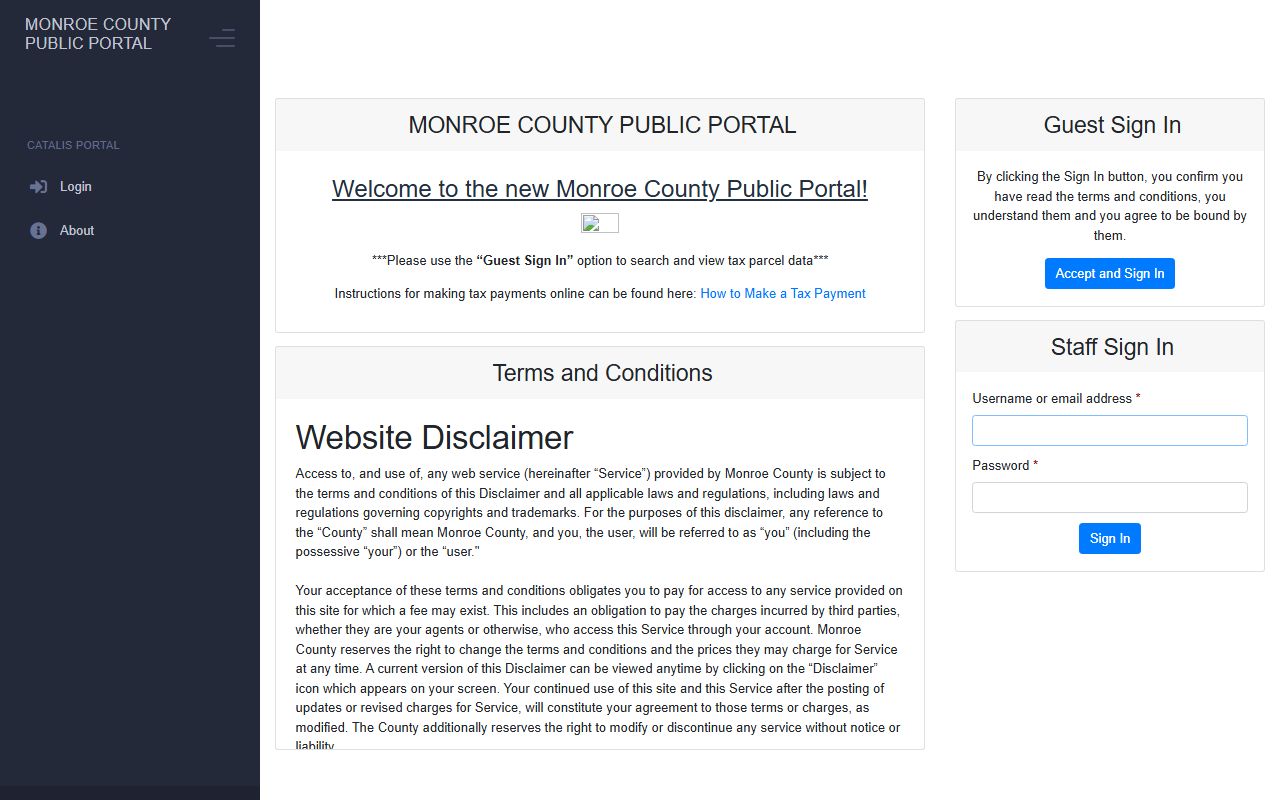
Use it when you want current payment details, parcel search, or tax bill history in one place.
Monroe County Property Tax Records Assessment
The Monroe County assessment page at co.monroe.wi.us/departments/assessment/ explains the value side of the record. It covers property assessment records, Board of Review, Open Book, appeals, assessor contacts, roll information, valuation, equalized values, notices, and revaluation. For Monroe County Property Tax Records, that is the piece that helps explain why the tax bill looks the way it does.
Assessment records are useful when the bill is not the problem but the value is. Open Book gives the owner an informal chance to speak with the assessor. The Board of Review is the formal review stage. When a parcel has a notice, a revaluation change, or an equalized value that does not match your expectation, the assessment page is the place to compare the local record to the current year value. It helps you see whether the issue is a data correction, a valuation question, or a broader countywide update.
The Monroe County Property Tax Records process becomes clearer when the assessment page is kept in the same working set as the treasurer page. One page shows what the county collected. The other shows how the value was built. That split is often the fastest way to tell whether the question is about payment or about assessment.
The assessment page at co.monroe.wi.us/departments/assessment/ is the official value record for Monroe County Property Tax Records.
Note: Open Book is the best time to correct a simple record problem before the Board of Review stage begins.
Monroe County Property Tax Records Deeds
The Monroe County Register of Deeds page at co.monroe.wi.us/departments/register-of-deeds/ is the recording side of the parcel file. It supports land records search, recording, copy and certification, online access, historical records, document images, UCC, plats, certified copies, and vital records. For Monroe County Property Tax Records, that is where the supporting document trail lives when a tax question turns into a deed question.
That office is useful when a parcel change needs proof. If ownership changed, if a legal description needs to be checked, or if a recorded image would help explain the tax record, the Register of Deeds page is the right county source. Land records can also help when the parcel history reaches back further than the current tax bill, since historical documents often explain why a name, tract, or parcel label changed over time. The recording office is the place to verify the paper side of the property record before relying on the bill alone.
Monroe County Property Tax Records become much easier to interpret when the deed trail and the tax trail are compared together. The tax record shows the account. The deed record shows the source documents that may explain how the account changed.
Wisconsin Property Tax Records Guidance
When Monroe County Property Tax Records need statewide context, Wisconsin's property tax rules help fill in the gaps. Wis. Stat. Chapter 70 sets the general tax framework, and Wis. Stat. Section 70.47 explains the Board of Review process. Those rules matter when a value, a notice, or an assessment change needs a public review path rather than a simple payment check.
The Department of Revenue also provides property tax administration resources and the Wisconsin Property Assessment Manual. Those official pages are useful when you want to compare Monroe County's local assessment record with statewide practice. If an appeal question remains after local review, Wis. Stat. Section 70.85 describes the Department of Revenue path for eligible properties. That gives you a state reference when the county record still needs a formal answer.
Monroe County Property Tax Records are easiest to trust when the county pages and the state rules agree. That is the point of keeping the official sources together instead of relying on an outside summary.
Delinquent Monroe County Property Tax Records
Delinquent Monroe County Property Tax Records usually begin at the treasurer page. The county handles delinquent management, settlement administration, municipal coordination, and tax deed process work there. When a balance is late, those functions matter more than the original bill image because they show how the county is treating the account now. That is the key difference between a routine tax search and a collection search.
The Catalis portal also helps when a parcel moves into a late stage. Because the portal supports payment history, current and historical data, and confirmation, it gives you a clean way to check whether a payment posted and whether the remaining balance is still open. If the parcel needs a deeper check, the treasurer page and the assessment page together can show whether the question is a payment issue, a value issue, or a tax deed issue.
For Monroe County Property Tax Records, delinquency is not just about a missed due date. It is also about knowing which county office now controls the next step. That is why the treasurer, portal, and assessment pages should be read as one set.
Monroe County Property Tax Records Search Tips
The most useful Monroe County Property Tax Records search starts with the most stable detail you have. If the parcel number is known, use it first. If you only have an address, compare the result with the treasurer page and the assessment page before you treat it as complete. The Register of Deeds page can also help when a recorded document or legal description needs to confirm that you found the right property.
Keep the year in view too. Current payment history, historical tax data, and older recorded documents can tell different parts of the same story. If a result looks off, switch to the alternate detail, check the parcel search again, and compare it with the online portal or assessment record. That habit keeps the search local and official, which is the safest way to work with Monroe County Property Tax Records.
Then use the search widget below if you want to try the lookup again from a different angle.