
Outagamie County Property Tax Records Lookup
Outagamie County Property Tax Records are easiest to read when you start with the county treasurer, then move to the search portal, land records, and property listing guidance that keeps the parcel file current. If you have an address, parcel number, or deed reference, the county pages let you move from a quick search to the bill history, document trail, and assessment context without relying on outside directories. That helps when you need to confirm a payment, compare a current charge with an older roll entry, or understand why a parcel changed after a split, a sale, or an address update.
Outagamie County Property Tax Records Portal
The best place to start is the county treasurer page at Outagamie County Treasurer. Rochelle Oskey serves as County Treasurer, the office is at 320 S. Walnut St., Appleton, WI 54911, and the phone number is 920-832-5065. The treasurer page is built around property tax inquiries, assessment links, search property tax records, delinquent taxes reports, bulk tax bill export, historical tax records, understanding your tax bill, payments, rates, address change, unclaimed funds, FAQ, and real property listing support. That makes it the county's main tax record doorway, not just a payment page.
The dedicated search page at Search Property Tax Records is the faster entry point when you already know the parcel or address. It connects the current account to the tax bill data and the historical record that explains what changed. For a lot of users, that means a search can answer the immediate question first, then send them back to the treasurer page if the bill needs a payment review or a delinquent check.
The portal is also useful because it keeps several record types in one place. You can check the current bill, confirm whether a payment posted, review older tax years, or export a broader bill set when you need a bigger parcel history. That is useful for title work, family land research, and routine owner questions. It also helps when a mailing address does not match the land record, since the address change tools sit near the rest of the tax account data.
Searches usually go faster when you have one of these ready:
- Parcel number
- Street address
- Owner name from a deed
- Prior tax bill or receipt
- Any old account number or bill image
That mix of records is important because Outagamie County Property Tax Records are not only about the amount due. They also show the path from the tax roll to the payment record, which is often what a user really needs when the account looks off.
Outagamie County Property Tax Records and Assessment Q&A
The county's property listing and assessment Q&A page at Property Listing and Assessment Q&A adds the parcel-side context behind the bill. The page points users to the Ascent Land Records website for assessments and explains where to look for combine and split parcel guidance. It also notes that prior year assessment rolls and tax rolls are available on the county's open data site, which is useful when you need to compare a current charge with an older year instead of guessing from the current bill alone.
That page is especially helpful when the tax record changed because the land changed. A split parcel can create a new account structure, a combine can move values together, and a corrected parcel label can make a bill look wrong until the old and new record are lined up. The county Q&A page is the place that ties those changes back to the public record instead of leaving you to piece it together from the tax bill alone. When a search result looks incomplete, the assessment page usually fills the gap.
The county's assessment material also makes it easier to see the difference between the parcel record and the annual tax roll. The tax roll shows what was billed. The assessment record shows the property data that fed the bill. The deed and parcel guidance explain why the record was updated. When those three lines agree, the result is easy to trust. When they do not, the Q&A page is the best local guide for finding out which part needs a closer look.
Working from the assessment page is practical because it keeps the county's own terminology in front of you. That matters for combine and split questions, because the same parcel may appear in more than one form across years. It also matters for prior roll research, since tax records often make more sense once the old assessment line and the new bill are read side by side.
Note: If a parcel was split or combined, the assessment Q&A and the deed record usually explain the tax change faster than the bill itself.
Outagamie County Deed and Land Records
The county Register of Deeds at Outagamie County Register of Deeds is the next stop when a tax issue turns into a document issue. Sarah Van Camp is the register of deeds, the office is at 320 S. Walnut St., Appleton, WI 54911, and the office is open Monday through Friday, 8:00 a.m. to 4:30 p.m. The phone number is 920-832-5095. The page covers real estate documents, land records, LandShark, historic maps, land notification, and real estate forms, all of which can matter when you need the document side of a property tax question.
LandShark at LandShark Online Document Access is especially useful when a tax record points back to a recorded deed, mortgage, lien, or other instrument. That document trail can explain a lot. It can show when ownership changed, what legal description was used, and why the parcel still appears under an older mailing pattern. For property tax research, that is often the difference between reading a bill and understanding the record behind it.
The historic map and land notification tools also add value. Historic maps help place old parcel names and old plat references in context, while land notification helps users stay aware of changes that affect the record. Real estate forms round out the office's work by giving you the filing path for recorded land documents. If you are checking Outagamie County Property Tax Records for title, transfer, or address questions, the Register of Deeds office is the record source that usually clears up the hardest part.
That office matters because a tax record is only as good as the land record that supports it. If the deed, the parcel history, and the tax bill point to the same land, the result is much easier to trust. If they do not, the document record is where the answer usually lives.
Delinquent Tax Records in Outagamie County
Delinquent Outagamie County Property Tax Records are still useful after the due date because they show how the county tracks a balance that has not been paid in full. The treasurer page includes a delinquent taxes report and historical tax records, so the public search can be used for more than just a current-year bill. It can also help when you are trying to see whether the county has moved the account into a different phase, whether a payment posted late, or whether the parcel needs to be checked against older tax years before another payment is made.
The treasurer page also lists unclaimed funds and FAQ material, which helps when a payment, refund, or account correction does not look right at first glance. That is useful in real life. Some records are delayed by escrow, some change after a parcel update, and some need a follow-up because the mailing address or account label was not current when the bill was issued. A delinquent tax search gives you the public side of that trail, while the treasurer office handles the account side.
If you are comparing a current result with an older one, the bulk tax bill export can be helpful because it lets you see more than one parcel or one year at a time. That wider view matters when a property owner has several parcels, when a bill moved after a land split, or when a delinquent balance needs to be tracked across years. For Outagamie County Property Tax Records, delinquency research is often less about punishment and more about finding the cleanest path back to the correct account.
When the tax file gets messy, the county's records stay valuable because they give you the account history instead of only the open balance. That history is what lets a user spot the missed step, the wrong parcel, or the payment that is still waiting to post.
Wisconsin Guidance for Outagamie County Property Tax Records
When Outagamie County Property Tax Records need state context, the Wisconsin Department of Revenue is the next stop. The general property tax framework is in Wis. Stat. Chapter 70, Board of Review procedure is in Wis. Stat. Section 70.47, and DOR supervision of assessment work is in Wis. Stat. Section 73.03. Those are the rules that help explain how a Wisconsin property tax record gets built and reviewed.
The state also keeps practical help in one place through property tax administration resources and the Wisconsin Property Assessment Manual. If you need to read the bill more closely, PB-060 is the property owner guide. If the parcel is agricultural or if a use-value question comes up, the same state page set also helps you compare the county record with statewide standards. That is useful because a county portal can tell you what changed, while the state material explains why the line exists in the first place.
The statewide reference image below comes from the Wisconsin Department of Revenue home page at revenue.wi.gov/Pages/Governments/home.aspx.
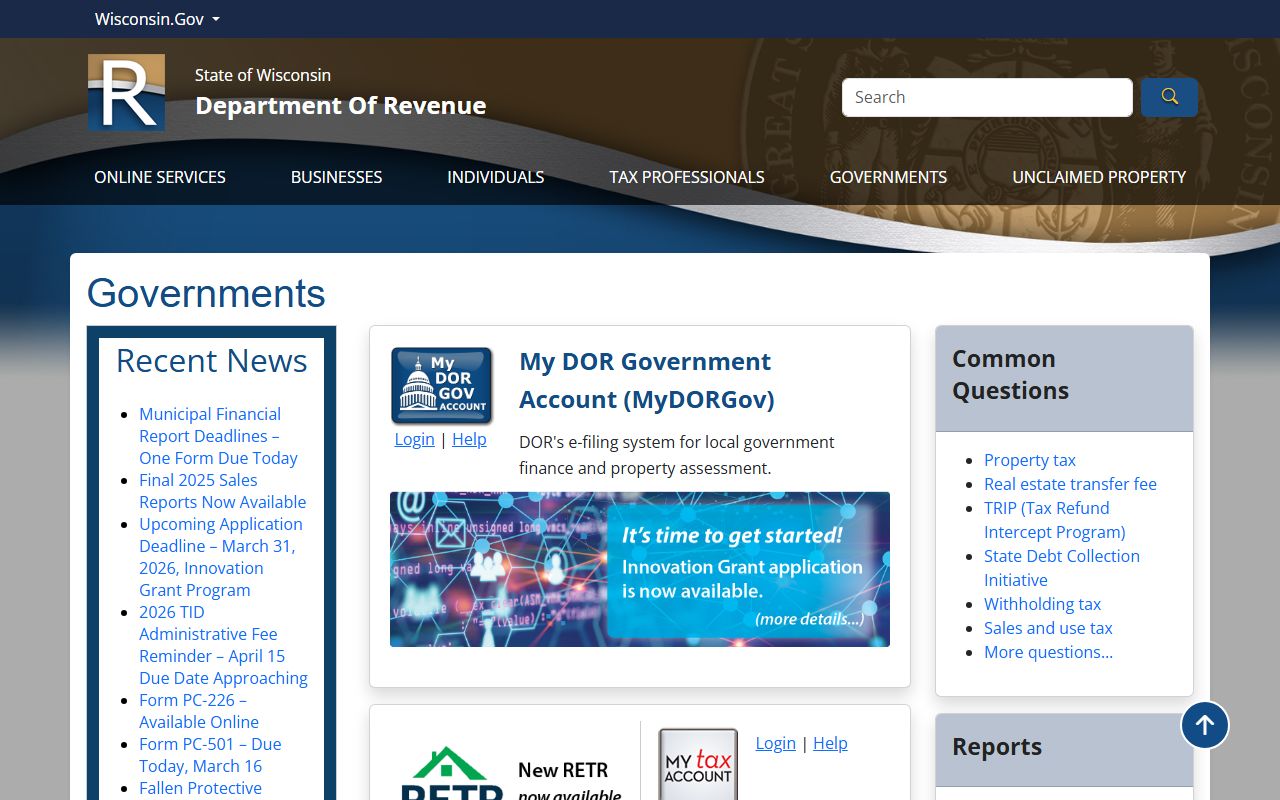
It is a neutral visual for Outagamie County Property Tax Records because the county's treasurer, assessment, and deed records all sit inside Wisconsin's broader tax system.
When the county record and the state guidance line up, the result is easier to trust. When they do not, the difference usually points to a local data question, not a mystery in the bill itself.
If you need another search, use the widget below and start with the parcel number or address. Outagamie County's treasurer page, property listing guidance, and Register of Deeds records all point back to the same parcel file, so a fresh lookup often answers the next question without much extra work.